

53 NFT Poker Playing Cards
minted in June 2016
minted in June 2016
The Deck features several world’s first and is among the top 3 most revolutionary NFT collections in history.
Contributions

1. Some of the earliest definitive NFTs
NFT stands for “non-fungible token”. Each card from The Deck is implemented as a distinct currency with a circulation of a single, indivisible unit. No card can be substituted for another because all are different currencies, making them truly non-fungible. Additionally, the indivisibility of the cards means that there is no way for any fraction of a Deck card to substitute for any other fraction of a card. For example, it is not possible to split the Ace of Spades into, say, four parts that could be confused with one another, breaking non-fungibility.
The Deck was described and launched on testnet in January 2016 and on mainnet in June of 2016.
The Deck NFTs were pictorially represented by playing cards, the art for which were created by Byron Knoll, and released into the public domain in 2011.
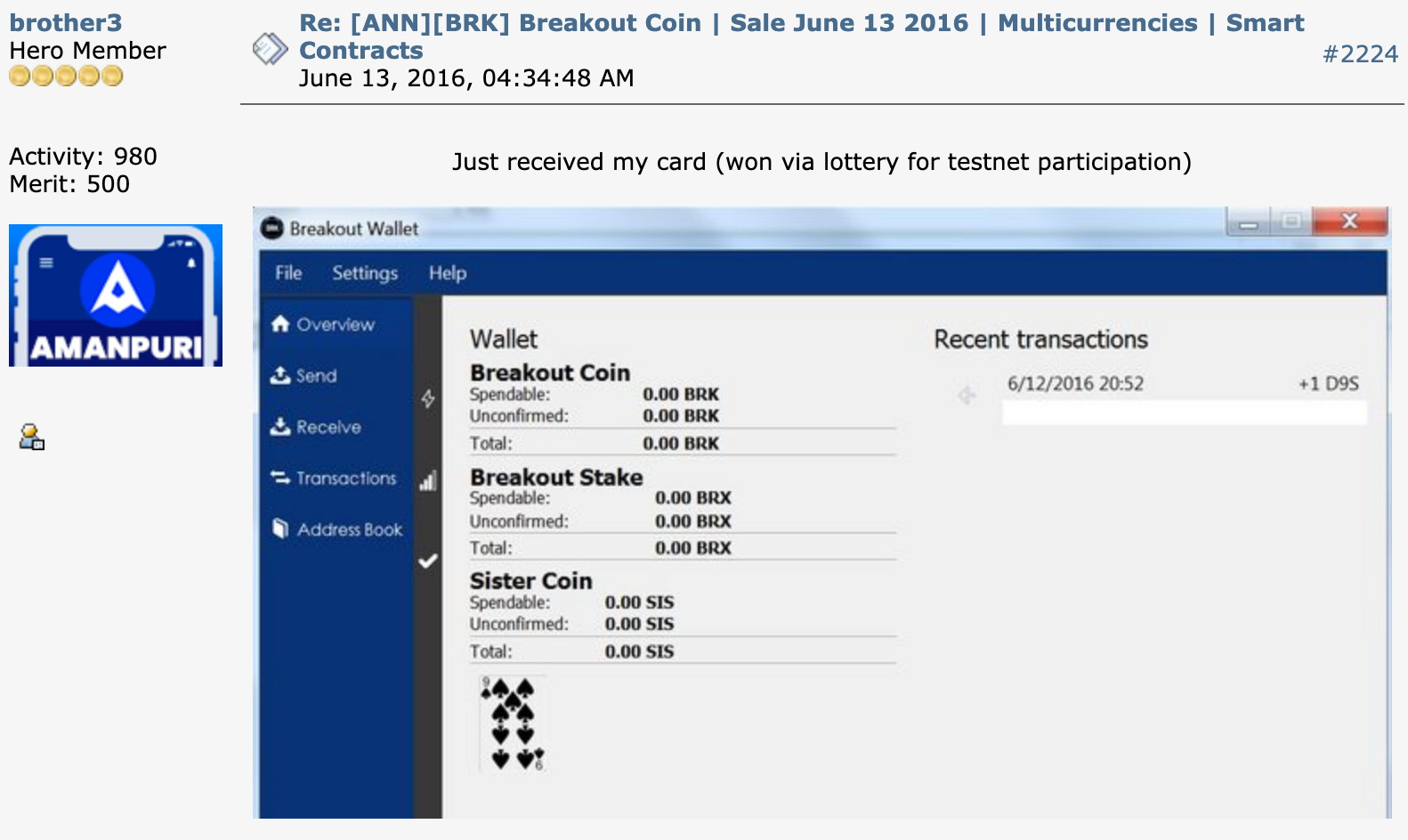
History’s first flex of an NFT minted on the mainnet of a cryptocurrency. Since capturing this screenshot of the post, the image of the wallet within has been deleted from its original hosting location.

Before The Deck, only one full NFT project had ever been launched: Etheria (October 2015). I define an “NFT project” as one that makes use of NFT technology rather than simply being a one-off NFT creation or a platform upon which NFTs can be created (like Namecoin or Counterparty)..
Namecoin did have some one-off NFTs. Namecoin NFTs took the form of transferable records that were originally intended to be domain name entries. Unfortunately for anyone claiming to have “history’s earliest NFTs”, Namecoin beats them by years simply because Namecoin entries meet all parts of the definition of “non-fungible token”.
Some Namecoin entries had images associated with them, but these took the form of URLs, the contents of which could change. Also, these profile pictures were not created as a collection nor were they curated in any way early on.
An example is the set of 277 so-called “Twitter Eggs” that were auto-generated Namecoin entries that store Twitter profile information, which includes a link to the profile picture. There were many Twitter Eggs of each colored background.
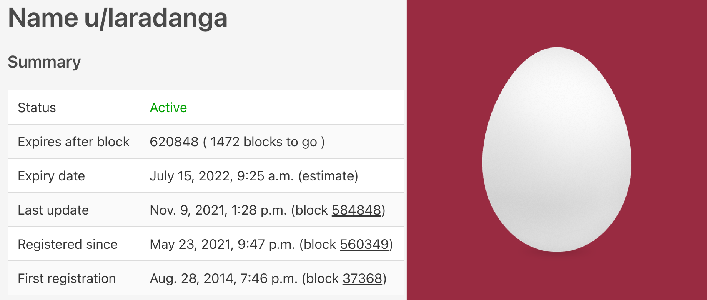
Header for the Namecoin entry u/laradanga (left). Associated with this entry is a URL for the Twitter egg profile picture (right).
The other early NFT project, Etheria, represented 457 ownable parcels of virtual land as NFTs. Etheria is notable because it is the first NFT metaverse project, first NFTs on Ethereum, and the first NFT smart contract. I also consider it to be the first NFT game.
Etheria was released in four versions (v0.9, v1.0, v1.1, v1.2) with only Etheria v1.2 being official. The earlier versions could all be considered “testnet” versions. Etheria was massively innovative, but fortunately for The Deck, it left some firsts on the table.
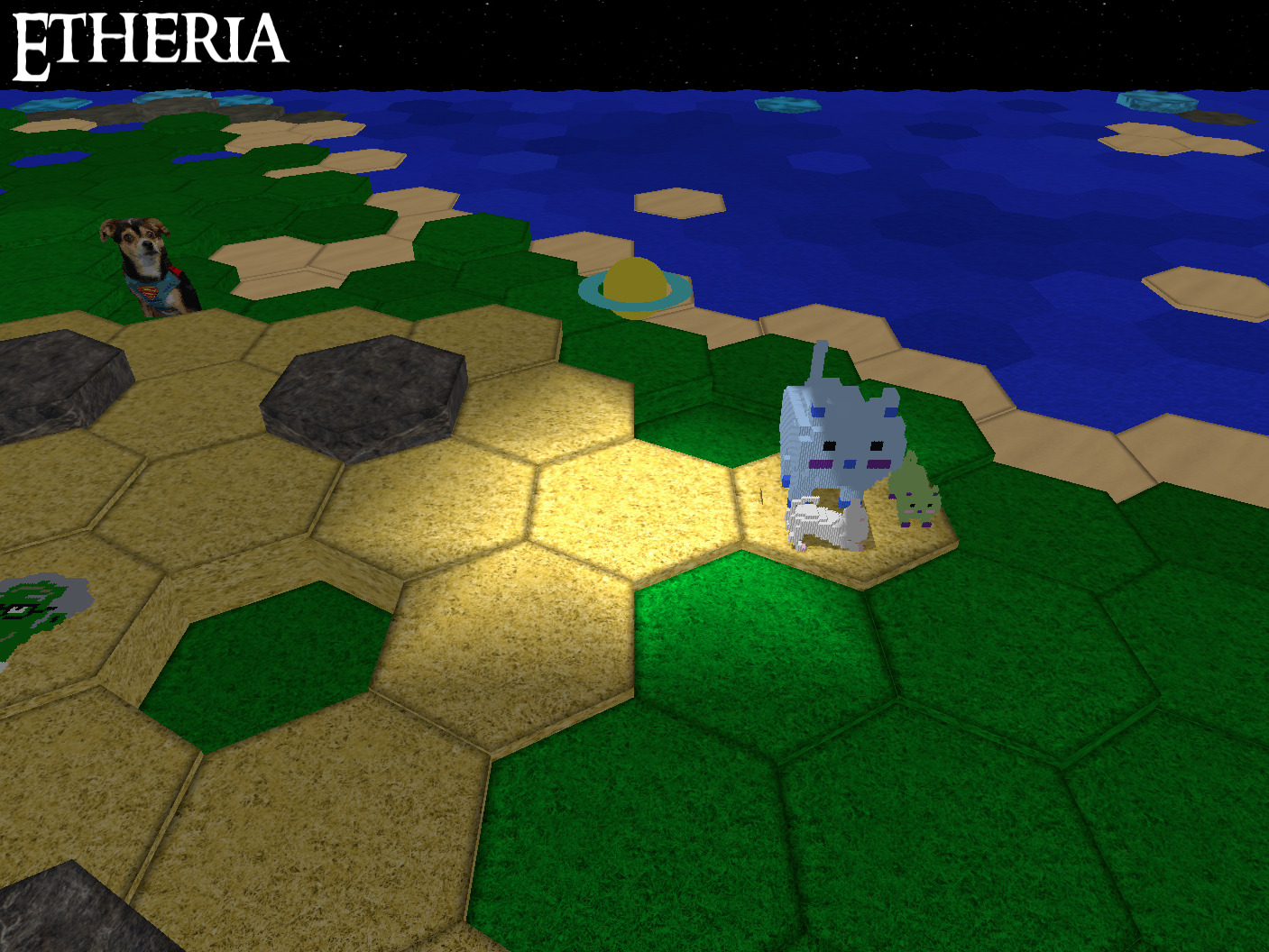
Several hexagonal NFT parcels of the Etheria v1.2 metaverse.
Click to enlarge
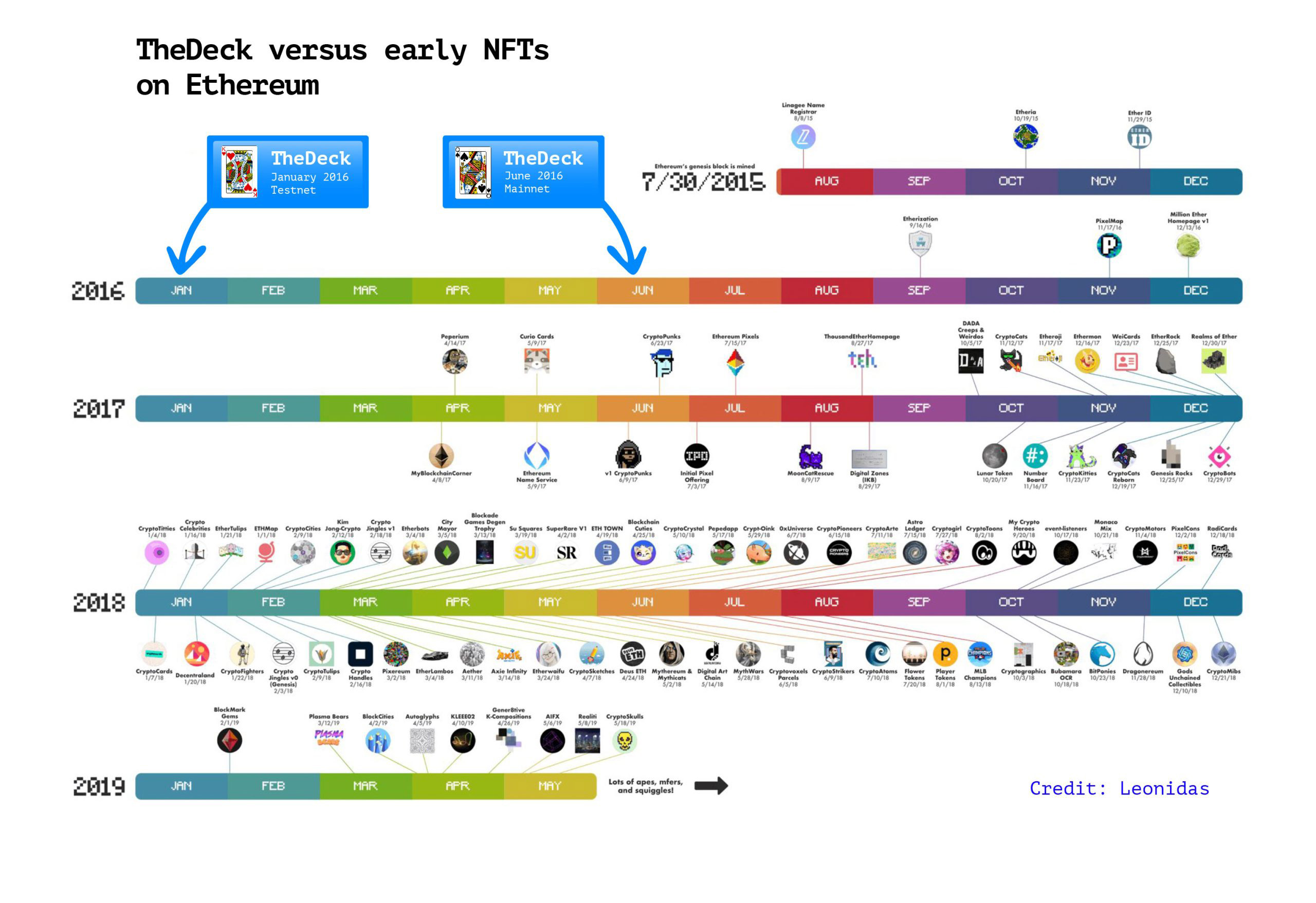
The original image created by Leonidas shows the timeline of early NFTs on Ethereum. The only collectible NFT project that precedes TheDeck is Etheria. TheDeck didn’t launch on Ethereum apparently, this is edited to visualize how early TheDeck was.
2. First NFT auctions
It is widely thought that the first live NFT auction happened in January 2018 with the sale of the HOMERPEPE rare Pepe NFT, minted in September 2016. The HOMERPEPE NFT was minted nearly four months after the launch of the Deck on mainnet, and nearly nine months after launch on testnet. The 2018 HOMERPEPE sale is considered to be a seminal event in the evolution of NFTs because it is thought to be the earliest live auction of blockchain art.
were several online auctions for cards from The Deck, the first of which was for the Jack of Hearts. This auction began on June 19, 2016 and ended on June 27 with a selling price of 1.25 BTC, which at the time was about $825.
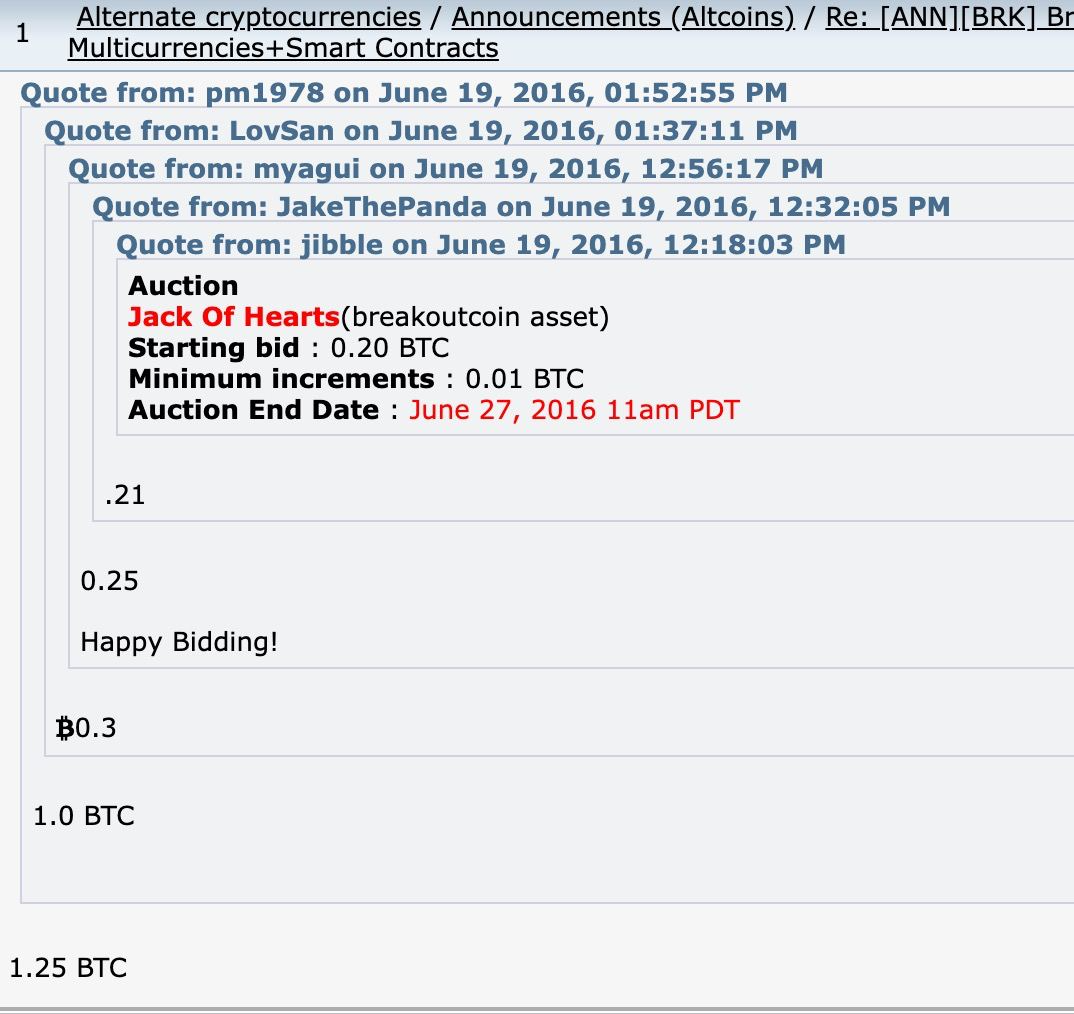
The bitcointalk post with the winning bid for history’s first NFT auction (online).
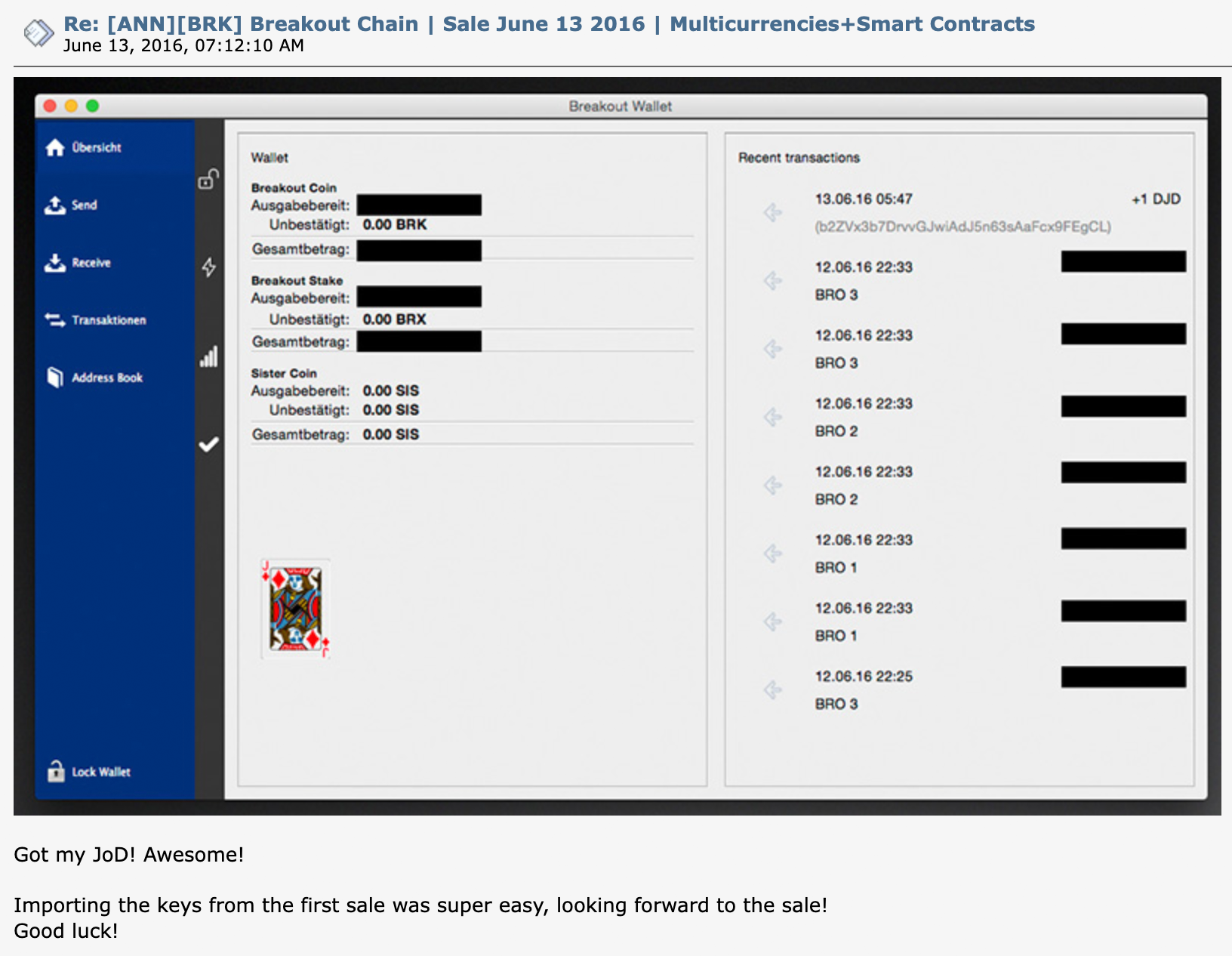
Screenshot taken from an early NFT flex, showing how a card appears in the wallet. The GUI wallet can display up to 15 cards on the overview page. Since capturing this screenshot of the post, the image of the wallet within is no longer displayed correctly on the bitcointalk forum, which is a known issue with imgur and not due to missing files, acknowledged by Theymos, OP and admin of the Bitcoin Forum. The original hosting location still features this screenshot incl. the date it was uploaded here. The direct image link can be found in the sourcecode of the page.
Amazingly enough, it took nearly a decade after the invention of NFTs (on Namecoin) for Ethereum NFTs to be browsable in one’s wallet, by using Metamask.
Five years prior to inclusion of this feature in Metamask, The Deck NFTs were viewable in the Breakout Chain wallet.
Each card in The Deck is represented by a picture that displays in the graphical (GUI) wallet of its owner. The image with the Jack of Diamonds is a screenshot taken from mainnet. It shows the very first verifiable NFT flex on mainnet. The Breakout Chain wallet will show up to 15 cards. I thought 15 slots would suffice because of the difficulty of collecting 15 of the 53 total cards after distribution, especially on mainnet. If I ever learn that anyone has collected more than 15 cards, I’ll either put the cards in their own tab, add a scrolling frame, or both.
4. The Deck is the Original PFP project
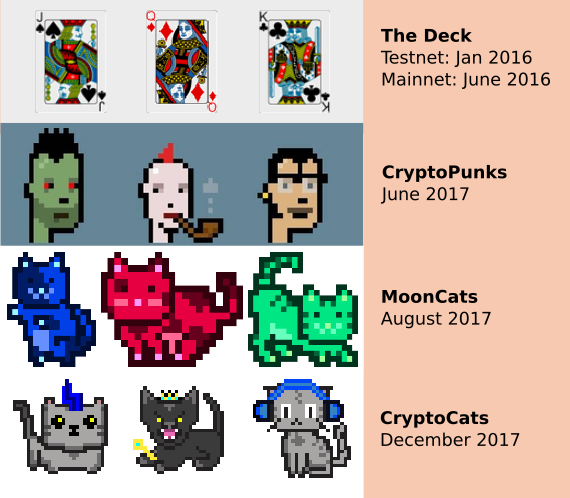
PFP stands for “picture for proof”, although more people recognize PFP to stand for “profile picture”. PFPs came to be synonymous with NFTs in about 2020 when social media users (typically twitter) began to flex cryptopunks. Other than The Deck in 2016, the earliest NFT projects known for PFPs are cryptopunks, mooncats, and cryptocats, all launched in 2017.
These projects have three features that make them suitable for NFTs: (1) they come as a set of unique images, (2) the images are rectangular, and (3) they look good at low resolution.
Additionally, face cards from The Deck are exceptionally suitable avatars.
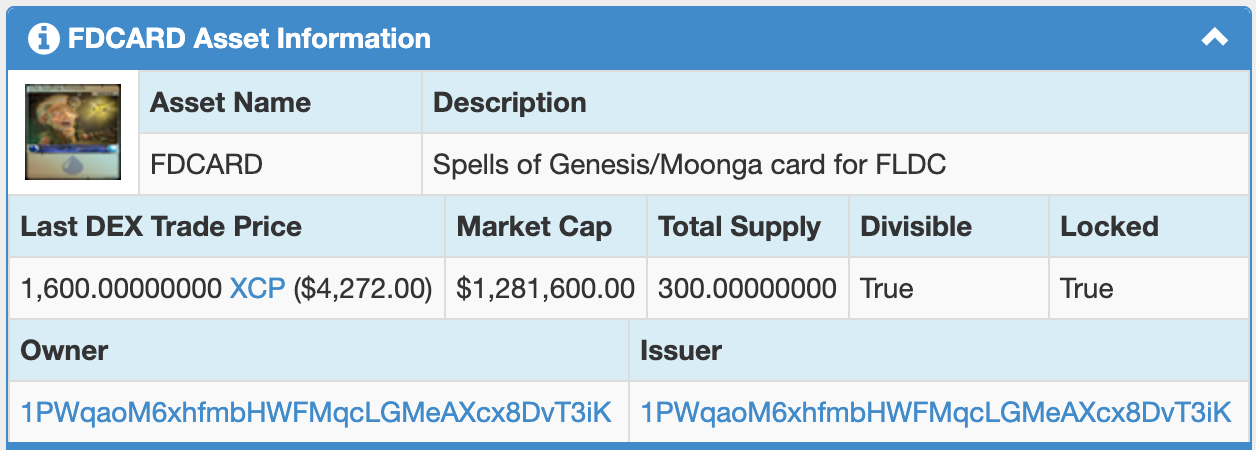
The only potential comparison in this area is Spells of Genesis, which offered virtual playing cards as Counterparty tokens, starting in March 2015 with the Moonaga card (ticker FDCARD). Although innovative and very early, Spells of Genesis cards were not NFTs because cards were represented by fungible assets with multiple units.
For example, the Moonaga token had a circulation of 300, meaning any of the 300 could be substituted for any other, making them fungible by definition. In sharp contrast, cards from The Deck are unique and cannot be substituted, making them non-fungible and true NFTs by every element of the definition.
6. First collectable NFT cards
Although Spells of Genesis cards were collectable, they were not NFTs. Another early collectible card project that could be compared to The Deck and Spells of Genesis is Curio Cards.
The first Curio Card was created in May 2017 on Ethereum, nearly a year and a half after The Deck on testnet, and nearly a year after The Deck on mainnet.
Curio Cards are similar to Spells of Genesis cards in that Curio Cards were created as fungible currencies, and therefore are not NFTs.
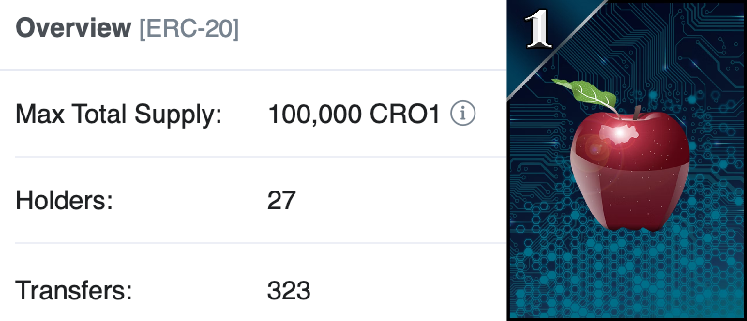
Overview of CRO1, the ERC-20 currency of the first Curio Card (left), along with the artwork represented by the card (right). Note that the maximum total supply of this card is different from the circulation (980).
The Deck was distributed by a provably fair lottery. Briefly, the lottery entrants were identified by the public key that corresponds to their Breakout address. The entrants, along with a starting order, were published on bitcointalk. The lottery used what at the time was a future Bitcoin block hash (block 396963) as the seed for a pseudo-random number generator (pRNG). The lottery was executed by a program that used the pRNG to shuffle the entrants, randomly matching them to cards.
The entrants, their ordering, and the program that executes the lottery were entered into the Bitcoin blockchain as a so-called proof-of-existence (PoE) prior to the designated block. Once the block hash was known, it was fed into the program to seed the pRNG, allowing anyone to verify the lottery results. A similar, but simpler, type of provable fairness was used for the now famous Satoshi Dice game created by Eric Voorhees.
8. First staking NFTs
Deck NFTs were created to explore the on-chain functionality of blockchain tokens. One such functionality was to have an NFT that could contribute to blockchain security. For this purpose, Deck NFTs can be used to mint blocks using proof-of-stake (PoS). In this system, users simply stake their cards until the cards gain enough “coin-age” to mint a block.
As a further exploration of this concept, higher value cards, like face cards, will mint a higher reward than lower value cards (described as “Reward Score” in the Gallery). Not only are Deck NFTs the first staking NFTs, no other NFT has ever been created that participates directly in blockchain security through staking.
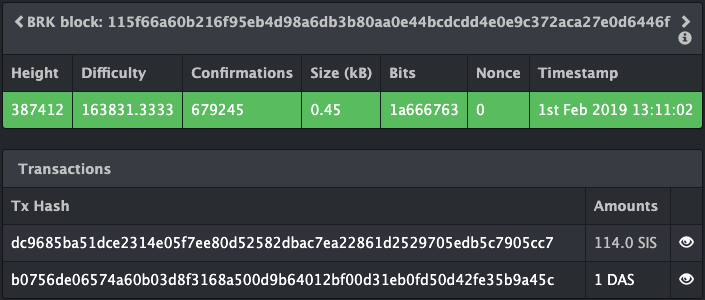
A proof-of-stake block minted by staking the Ace of Spades. For technical reasons, the staking transaction (TxID b0756…) is separate from the block reward transaction (TxID dc968…), but the result is that a new block is created along with the block reward. The block reward here is in a currency called Sister Coin (SIS).
The Deck is f****** unique and special in every aspect.

9. Cryptographic commitment in the blockchain
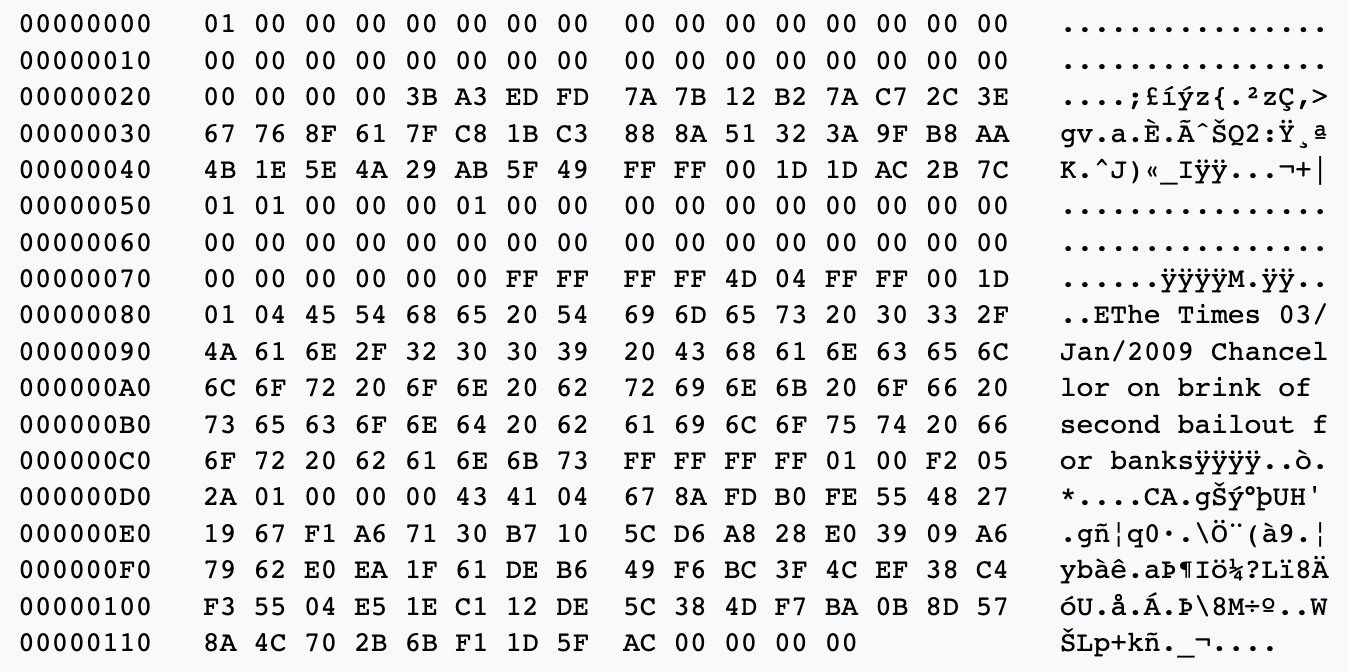
The identities of The Deck NFTs are encoded into the Breakout Chain blockchain as input to the genesis block. This input is termed “coinbase”. Most of those somewhat familiar with the Bitcoin protocol have read the phrase “Chancellor on Brink of Second Bailout for Banks”, which was the title of a January 3, 2009 cover story ran by The London Times. This title is enshrined in the Bitcoin blockchain as coinbase to the Bitcoin genesis block hash.
In the same way, the identities of the Breakout Deck cards are enshrined in the Breakout blockchain as coinbase. This coinbase is a long phrase composed of every card’s identity (e.g. “Ace of Spades”) separated by a comma and a space. The encoding is done in such a way that the identity of each NFT is unambiguous.
So far, every other known NFT is created in a transaction that includes the token parameters. These parameters include the number of tokens, the divisibility, a link to associated artwork, etc. Of course to be a proper NFT, the number of tokens must be one and that one token should have no divisibility. The most famous type is the ERC-721 standard of Ethereum.
NFTs from The Deck are created in a different way because they are first class currencies. Similar to well known cryptocurrencies (like BTC), Deck NFTs are hard-coded into the blockchain and are mined into existence in the form of block rewards. Over six years later, no other NFTs have been mined into existence in this way.
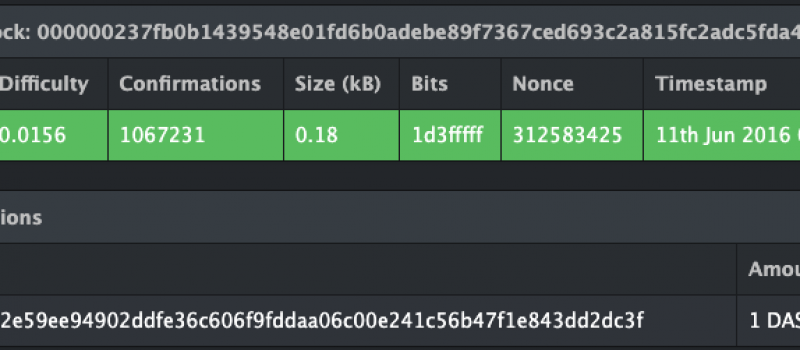
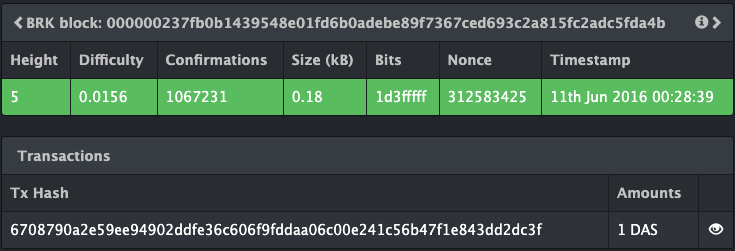
The Ace of Spades (DAS) was mined in block 5 of the Breakout Chain. The block reward transaction (TxID 67087…) for this block emitted the DAS, just as a Bitcoin block would emit several Bitcoins in its block reward transaction.
11. Only NFTs that are enforced by a consensus protocol
All NFTs aside from The Deck exist as either smart contracts, like ERC-721, or non-consensus tokens layered on top of a consensus protocol, like Counterparty tokens. In neither case does consensus necessarily rely on valid NFT token transactions. For example, it is possible to have a perfectly valid Bitcoin transaction that double-spends a Counterparty token.
The Counterparty protocol, which is a third party protocol that uses Bitcoin, will ignore the transaction, but it cannot stop the double spend from getting in the Bitcoin blockchain. ERC-721 tokens are smart contract standards, and the spending properties of the tokens are subject to changes in the smart contract. Cards from The Deck cannot be double spent, nor is it possible to change a smart contract and alter the nature of a card from The Deck. The term I use for currencies that are intimately tied to blockchain consensus is “first class cryptocurrencies”.

© Copyright 2026 The Deck
